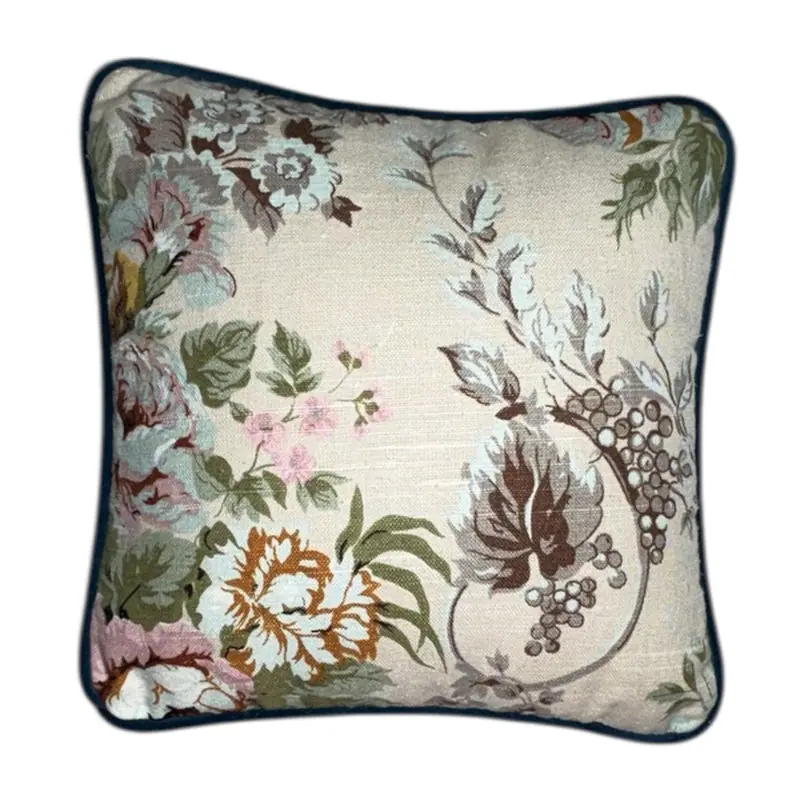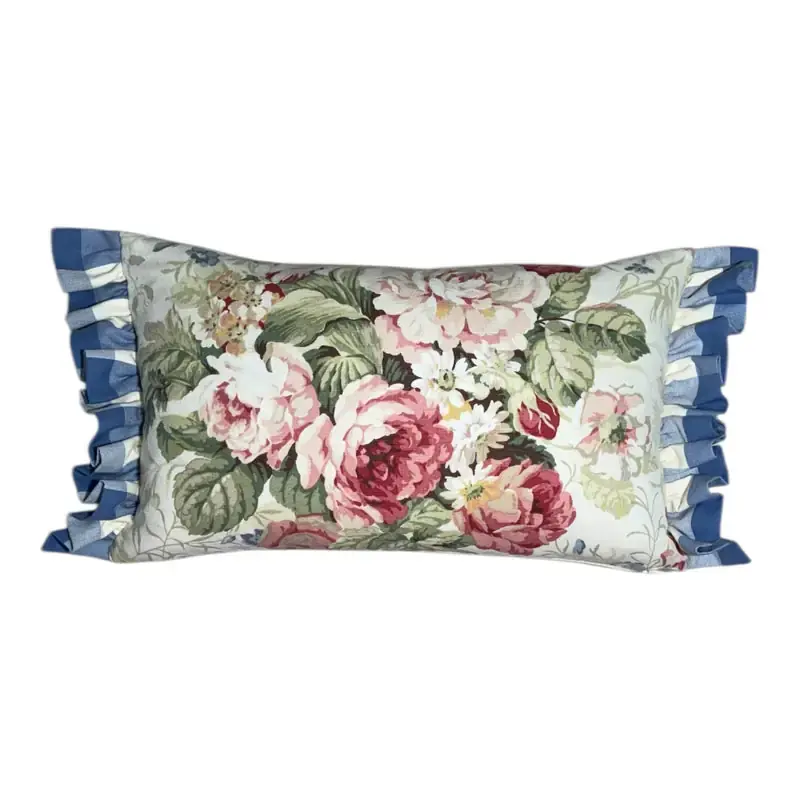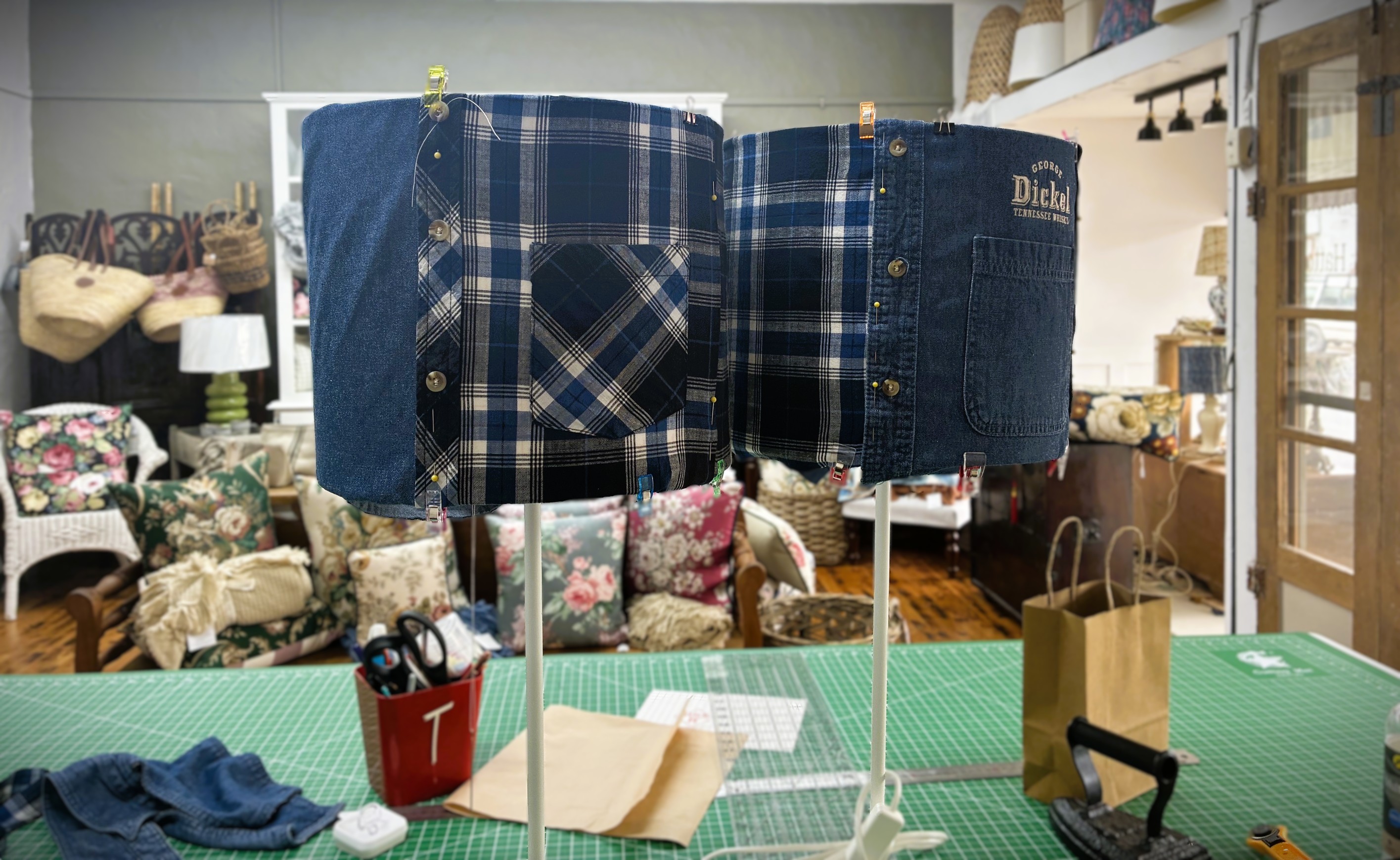
The building at 66 Gaskill Street was a corner store once. The front window still has the ghost of old lettering underneath the paint — a pharmacy, someone in town told us, before it was a deli, before it was briefly a picture-framing shop, and now this: a workroom full of fabric, hanging bolts, a long cutting table and the particular quiet that settles around a sewing machine after a morning's work.
We get asked a lot about the space — what it looks like, how it's organised, what it smells like (fabric, mostly, and the trace of the cedar sachets we keep in the bolt drawers). So here's a look inside.
The walls
The fabric hangs on the walls. Not arranged by colour — though it probably should be — but in something closer to the order it arrived. New bolts go up at the far end near the window. As they get assessed and marked and cut, they migrate toward the cutting table. By the time a fabric is nearly gone, it's folded on the shelf beside the machine where we can grab what's left without thinking about it.
The walls hold maybe forty bolts at any given time. Some are recent arrivals that haven't been properly assessed yet. Some have been there so long we've started to think of them as furniture. There's a length of French linen near the back wall — a soft dove blue — that arrived two winters ago and we haven't been able to bring ourselves to cut yet. It'll happen when the right project presents itself.
The cutting table
The cutting table is the centre of everything. It's wide enough to lay out a full width of fabric without folding, long enough to cut a 65 × 65 cushion front with proper seam allowance. The surface is marked with the residue of a hundred pattern placements — faint chalk lines, pin holes, the ghost of a ruler. We have a fresh cutting mat but we rarely use it. The table knows what it's doing.
Cutting is the slowest part. You have to study the pattern placement before the first snip — a rose that drifts off-centre by three centimetres becomes a problem on the finished cushion that no amount of styling can fix. We look at the fabric for a while before we touch it. Sometimes a long while.
The machine
The Singer is older than the shop. We've had it serviced twice since we started, and it's been temperamental about thread tension ever since the second time. We've learned to work with its moods. On a good day — the right weight of thread, the right needle for the fabric — it's as satisfying a tool as we've ever used. The sound alone is worth it.
We also have a serger for finishing raw edges, and a hand iron that lives on its own small table beside the machine. Every seam gets pressed as we go. Not at the end — as we go. It's slow, but a pressed seam is a seam that holds its shape for twenty years instead of five.
The light
The light in the space changes through the day. Morning is best: the front window faces east and the early sun comes through sideways and picks up the colour in the fabric in a way that's impossible to photograph accurately. We often do our colour-matching in the morning for this reason.
By afternoon the light is flatter and we switch to the overhead task lights. Good for construction — not so good for colour decisions. We've learned to start the morning with assessment and matching, move to cutting through the middle part of the day, and save the sewing for the afternoon when precision matters more than colour judgment.
The people
It's a small space. One person at the cutting table. One person at the machine. The dog in the corner, who has strong opinions about where the finished pieces get stacked to photograph. He's been wrong every time so far, but he doesn't let that deter him.
If you're ever in Canowindra — and it's worth a visit, the town itself is beautiful — the studio is open Tuesday to Friday, 10am–4pm, and Saturday, 10am–2pm. We don't run set appointment times; if the sign is out, the door is open. Come and look at the fabric. Bring a question about a project or a piece you've been thinking about. We're usually in the middle of something but we don't mind the interruption.